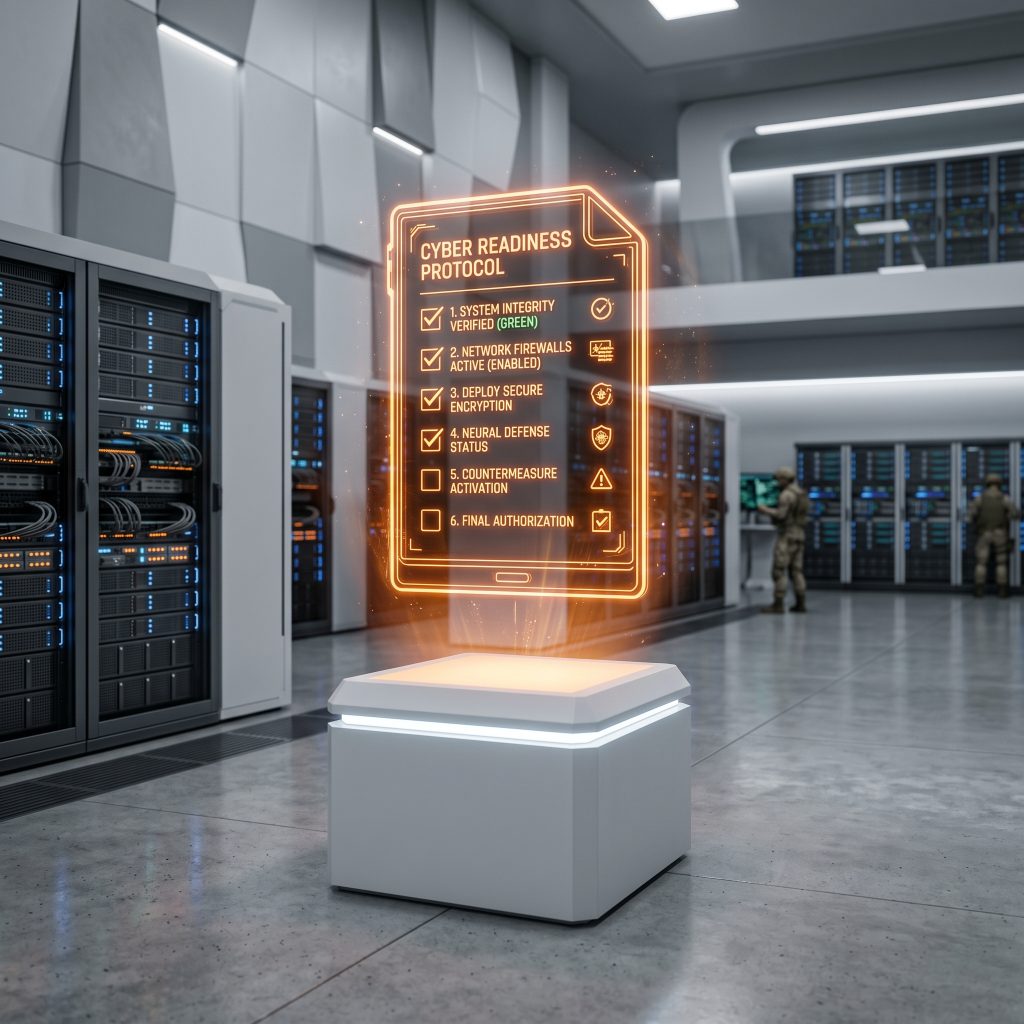

Aerospace manufacturing cybersecurity has become an essential investment for companies developing aircraft components, satellite systems, propulsion technologies, and military defense equipment.
As manufacturers adopt connected CNC machines, cloud platforms, automated production systems, and digital engineering tools, they face new challenges in protecting sensitive information and maintaining reliable operations.
Why are aerospace manufacturers investing in cybersecurity? To protect intellectual property, prevent production disruptions, secure manufacturing equipment, reduce supply chain risks, and meet applicable defense contracting requirements, such as NIST SP 800-171 and CMMC.
For aerospace manufacturers supporting the U.S. defense industrial base, cybersecurity is no longer just an IT responsibility. It is an important part of protecting engineering capabilities, customer relationships, and manufacturing operations.
Here are nine cybersecurity priorities aerospace manufacturers should understand in 2026.
1. Protecting Aerospace Intellectual Property and Sensitive Engineering Data
Aerospace manufacturers develop and manage valuable technical information, including aircraft designs, engineering drawings, manufacturing specifications, and proprietary production processes.
Unauthorized access to this information can expose sensitive technologies, undermine competitive advantages, and create contractual or regulatory concerns.
Protecting CUI and Export-Controlled Technical Data
Defense-related aerospace manufacturers may handle Controlled Unclassified Information (CUI), export-controlled technical data governed by the International Traffic in Arms Regulations (ITAR) or the Export Administration Regulations (EAR), or other sensitive information.
These categories have different legal and contractual requirements. Not every proprietary drawing is CUI, and not all export-controlled information is subject to identical handling rules.
Manufacturers should identify what information they possess, where it is stored, who can access it, and which safeguards apply.
Important security measures may include:
- Role-based access controls
- Multifactor authentication
- Encryption and secure file sharing
- Monitoring of sensitive file access
- Documented information-handling procedures
- Appropriate restrictions on third-party access
Aerospace companies should also evaluate how engineering files are shared with subcontractors and external manufacturing partners.
Official references:
- National Archives: CUI Registry
- DoD CUI Program
- U.S. Department of State: Directorate of Defense Trade Controls (ITAR)
- U.S. Department of Commerce: Bureau of Industry and Security (EAR)
Brea Networks helps defense contractors protect sensitive information through managed cybersecurity and secure IT services, including access controls, monitoring, and secure collaboration environments.
2. Preventing Ransomware and Aerospace Manufacturing Downtime
Ransomware and other cyber incidents can interrupt critical business systems and disrupt manufacturing operations.
For aerospace manufacturers, losing access to engineering drawings, production schedules, quality-control records, or inventory systems can affect the ability to manufacture and deliver components.

How Cyberattacks Can Affect Production
Consider an aerospace manufacturer producing precision components for a defense contractor.
If ransomware compromises the company’s file server, employees may lose access to approved machining instructions and inspection documentation.
Even if CNC equipment remains operational, production may be delayed because personnel cannot retrieve or verify the information needed to continue work.
Depending on the systems affected, a cyber incident can result in:
- Interrupted production schedules
- Delayed customer deliveries
- Loss of access to technical documentation
- Disrupted supplier communication
- Recovery and incident-response expenses
- Potential contractual consequences
The actual impact depends on the manufacturer’s systems, recovery capabilities, and contractual commitments.
Contractors subject to DFARS 252.204-7012 must also report qualifying cyber incidents to the Department through the DIBNet portal within 72 hours of discovery.

Need CMMC & DOW Compliance Documentation?
Stop searching across multiple sources for the guidance you need. Access CMMC resources, DOW compliance documentation, DFARS information, SSP guidance, POA&M resources, and assessment materials in one place.
Download the CMMC & DOW Compliance Documentation PDF to help support your cybersecurity and compliance program.
Strengthening Cyber Resilience
Manufacturers should prioritize tested backups, endpoint protection, incident-response planning, and business continuity procedures.
Backup strategies should account for engineering files, production records, critical configurations, and the systems needed to restore operations.
Official references:
- CISA: #StopRansomware
- NIST SP 800-61 Revision 3: Incident Response Recommendations
- NIST IR 8374: Ransomware Risk Management
- DoD DIBNet: Cyber Incident Reporting
3. Securing CNC Machines and Connected Manufacturing Systems
Modern aerospace manufacturing facilities increasingly connect engineering workstations, CNC equipment, industrial controllers, and production management systems.
These connections improve efficiency but can introduce cybersecurity risks if access is not properly controlled.

How CAD Files Move Through a Manufacturing Environment
Consider a typical aerospace manufacturing workflow:
Step 1: Engineering Design
An engineer develops a component using computer-aided design (CAD) software.
Step 2: Manufacturing Preparation
The approved design is transferred to a computer-aided manufacturing (CAM) system, where machining instructions are generated.
Step 3: CNC Production
Authorized personnel transfer the required manufacturing program to a CNC machine or its supporting controller.
Step 4: Quality Inspection
Inspection results and production records are collected and shared with the appropriate quality-control and engineering personnel.
Each stage may involve different computers, networks, user accounts, and information-handling requirements.
If an attacker compromises on an engineering workstation or an insecure remote connection, the incident could affect access to production files or other connected systems.
The exact consequences depend on the equipment and environment.
IT vs. OT Cybersecurity
Information technology (IT) includes business systems such as servers, workstations, email, and cloud applications.
Operational technology (OT) includes systems that monitor or control physical equipment and industrial processes.
Aerospace manufacturers often need to secure both.
Because industrial equipment can have availability and safety constraints, cybersecurity updates should be coordinated with production and engineering personnel.
Recommended measures include network segmentation, controlled vendor access, asset inventories, monitoring, and appropriate recovery procedures.
The NIST Guide to Operational Technology Security, SP 800-82 Revision 3, provides detailed guidance on managing cybersecurity risks in industrial environments.
Official references:
- NIST SP 800-82 Revision 3: Guide to Operational Technology Security
- CISA: Industrial Control Systems
- NIST MEP: Cybersecurity Resources for Manufacturers

Schedule a free consultation with the Brea Networks team to review your current environment, identify compliance risks, and understand what steps are required to move forward. A short conversation can help you avoid costly mistakes and focus on what matters for contract eligibility and security.
About Brea Networks
Brea Networks is a cybersecurity and compliance-focused IT partner dedicated to supporting Defense Industrial Base (DIB) contractors. We help organizations understand and implement the security requirements outlined in FAR 52.204-21, DFARS 252.204-7012, and the CMMC framework from Level 1 self-assessments to Level 2 and Level 3 readiness. Our team works alongside contractors to strengthen system security, define assessment scope, prepare documentation such as System Security Plans (SSPs) and POA&Ms, and build sustainable cybersecurity programs that protect FCI and CUI. Whether you are preparing for a self-assessment or simply improving your security posture. Brea Networks provides practical guidance and technical expertise to help you move forward with confidence.
Brea Networks, LLC
471 W Lambert Rd Ste 105
Brea, CA 92821
https://www.cmmccompliance.us
https://www.breanetworks.com
Telephone: 714-592-0063